A Sensor Atlas for Planetary Software
- sensors
- interstitial
Part of the work at Interstitial has been looking at how we can make sensor datasets more accessible. Eventually, that requires building a protocol. In the meantime, it requires us to make an easy-to-use Rust API and MCP service, so that tools built on large language models can more accurately interface with the physical world around us.
We tend to phrase Interstitial's purpose as building the substrate for physical world intelligence. That work has been happening quietly in the background for the last couple of months. This is a look at what one of the potential products can look like, and a way to highlight just how much data already exists.
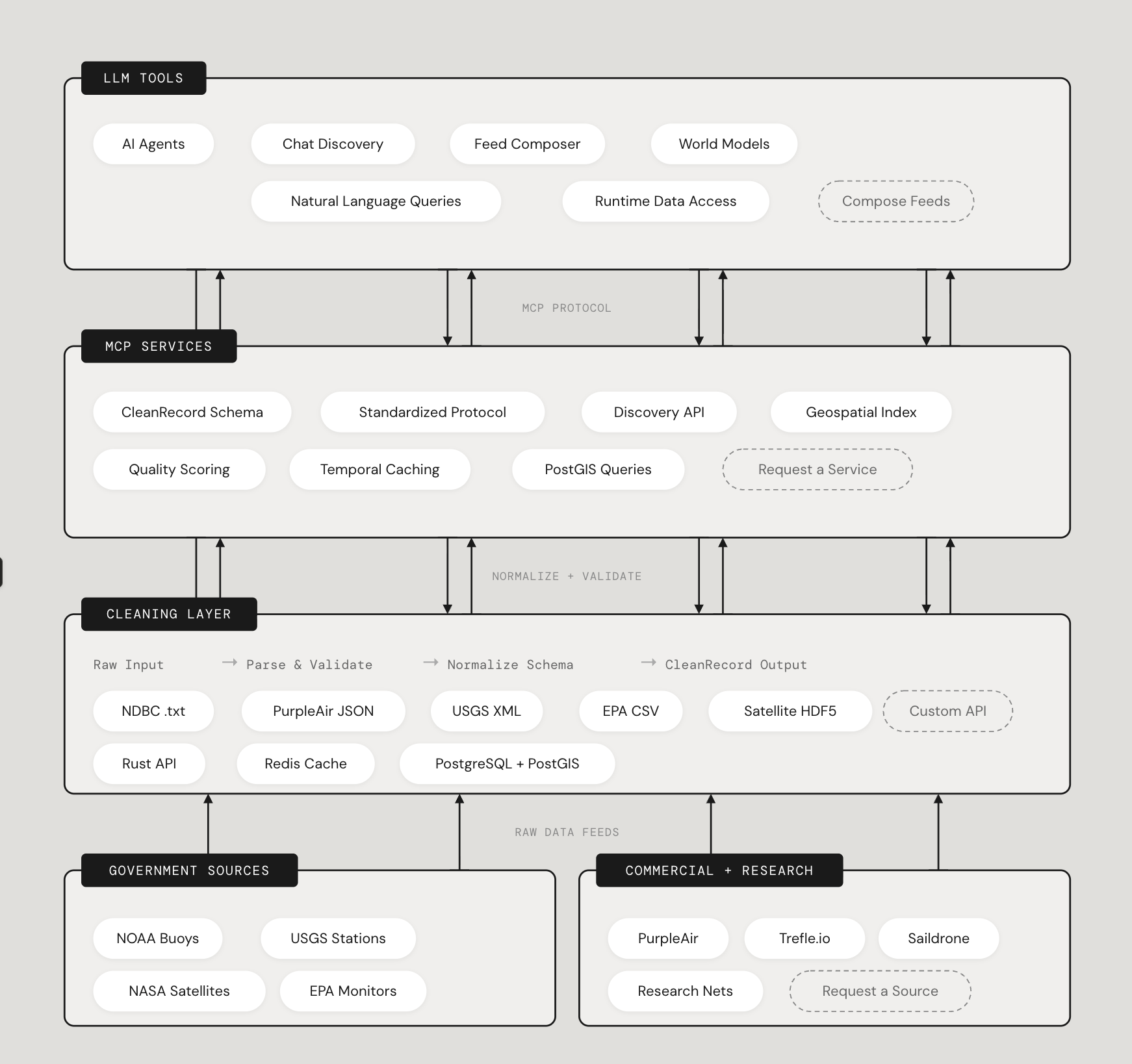
sensors.planetary.software is an experiment highlighting the sheer number of publicly available datasets that give you near real-time access to sensors all over the world.
In the current demo, the data is very US-centric. However, there's a backlog of data to import from other countries that operate similar services to organizations like the National Oceanic and Atmospheric Administration (NOAA), which also cooperates with NASA, as well as services like PurpleAir and AirNow. Part of what we're showcasing here is the potential overlap between public and private partnerships that offer publicly available data, and what it looks like when those independent data streams are normalized so they can be queried simultaneously across different ecosystems whether through a Rust API or an MCP service exposed to an LLM.
Browsing by Natural Language
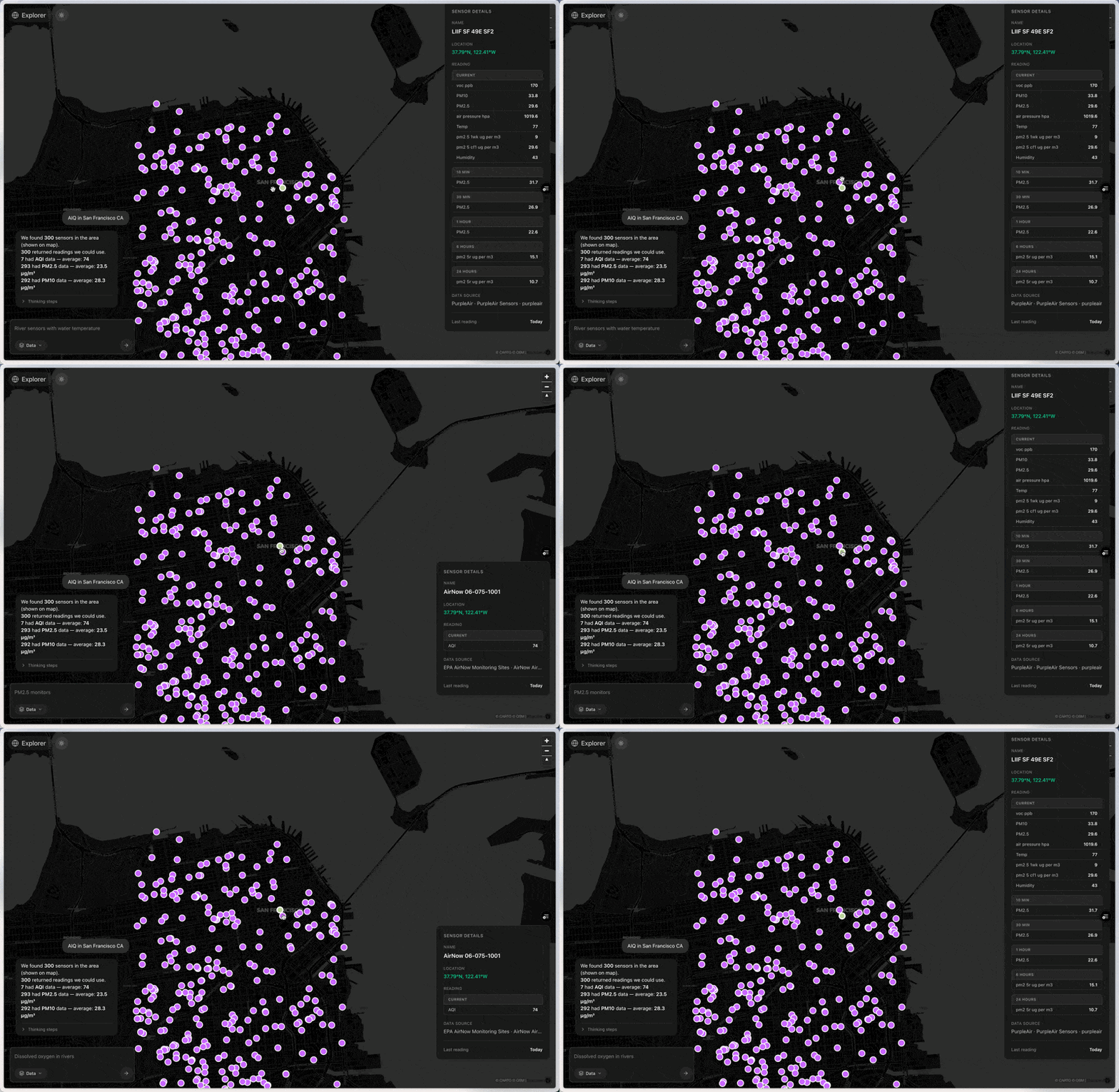
In the demo, you can browse different datasets to get a feel for what the product can do. Choose a city and look up air quality, temperature, humidity — air quality being the densest data network we currently have available.
Ocean Data and the National Buoy Network
You can also query more ocean-specific information based on the buoy network available around the world. NOAA's network consists of hundreds of partner organizations that have come together to create a national buoy system covering everything from weather detection to tsunami updates. It's a fascinating dataset to explore and start visualizing in a basic mapping interface.